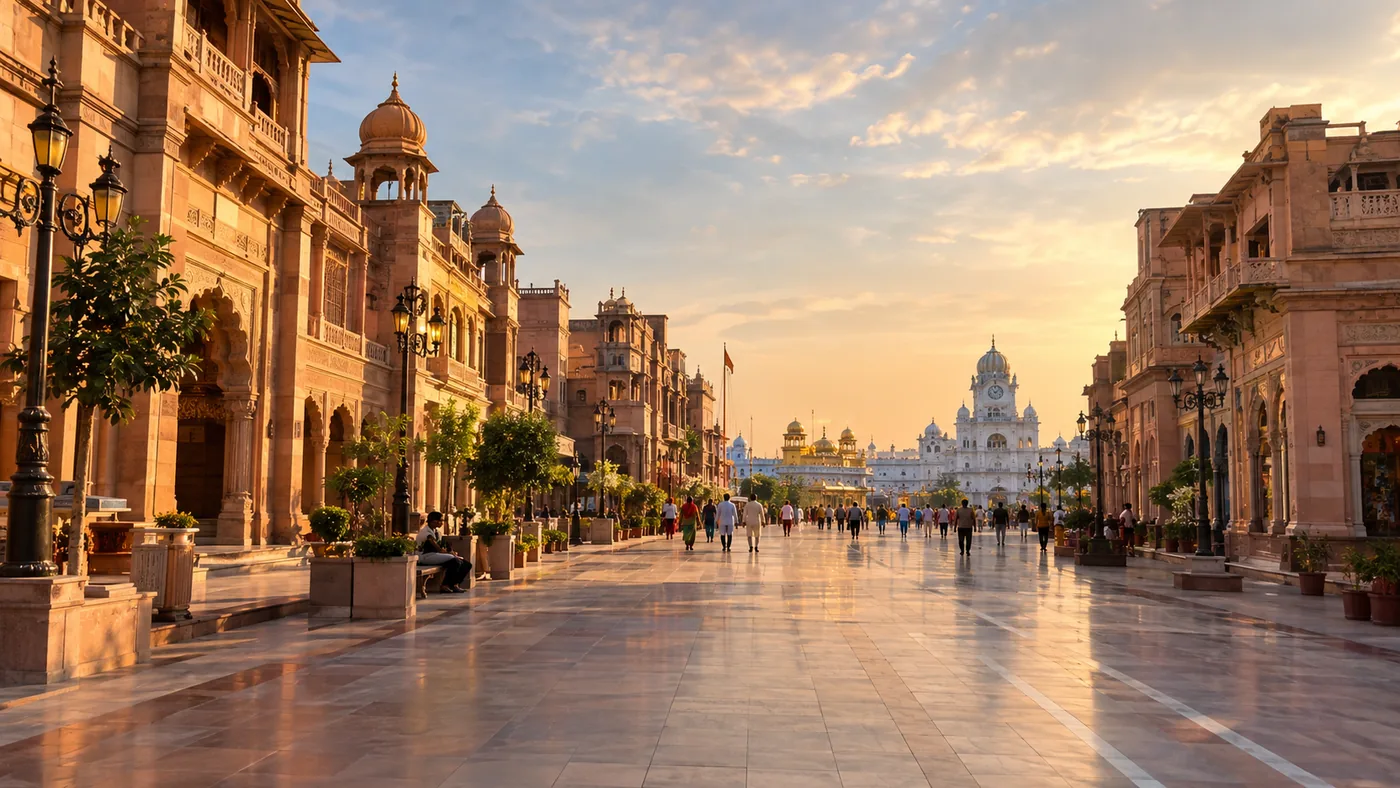
Booking choice: The Golden Temple, Jallianwala Bagh and Wagah day, ★ 4.9 (47). Check dates Compare the options below
The Golden Temple never closes, and there is no ticket, so you can visit on any day of the year. What changes is the experience. The weather decides how the marble feels under your bare feet, the festivals decide how many people share the walkway with you, and the hour decides how long the line to the sanctum is. More than 100,000 people come on a typical day, and several times that number on the biggest festivals.
This guide goes through the year month by month, gives the festival dates for 2026 and 2027, compares the times of day and the days of the week, and explains how the border ceremony at Attari moves with the seasons. For the length of a visit and the queue itself, see how long a visit takes; for what to wear in each season, see the rules and dress code.
The quick answer
The best months are October to March. Late October, November, February and March are mild and dry, with average highs of 22 to 32 °C. December and January are the coldest: average lows of 4 to 5 °C, cold marble at dawn and frequent fog that delays flights and trains. April to June is hot, with average highs near 39 °C in May and June; the marble burns in the afternoon, so go before dawn or after dark. July to September is the monsoon, humid, with heavy showers and fewer visitors. The biggest festivals in the coming months are Guru Ram Das's Parkash Purab on 27 October 2026, Bandi Chhor Divas with the lamps on 8 November 2026 and Guru Nanak's Parkash Purab on 24 November 2026. The calmest hours are before dawn and late at night; Sundays are the busiest day of the week.
Which is the best month to visit the Golden Temple?
November, February and March, closely followed by late October and December. These months are dry and mild, and the marble stays pleasant under bare feet. December and January are cold and foggy in the mornings, April to June is very hot, and July to September is wet.
The table uses the official average highs and lows for Amritsar (India Meteorological Department normals for 1991 to 2020). Averages hide the extremes: in May and June, days above 40 °C are common, and in December and January the nights can drop close to 0 °C. The crowd column describes patterns, not live data. Every day at the temple is busy, and festival days are much busier.
| Month | Weather (average high / low) | Crowds | Verdict |
|---|---|---|---|
| January | 18 / 4 °C, cold, foggy mornings | Steady; foundation day on 14 January 2027 | Good if you dress warmly and plan for fog |
| February | 22 / 7 °C, mild and mostly dry | Steady | One of the best months |
| March | 27 / 11 °C, warm days, cool nights | Steady | One of the best months |
| April | 34 / 17 °C, hot afternoons | Very busy around Vaisakhi (14 April 2027) | Fine early and late in the day |
| May | 39 / 22 °C, very hot, dusty winds | Thinner in the afternoon heat | Visit before dawn and after dark only |
| June | 39 / 25 °C, very hot, first rains | Thinner in the afternoon heat | Visit before dawn and after dark only |
| July | 35 / 26 °C, the wettest month, humid | Lighter | Possible, with slippery marble |
| August | 34 / 25 °C, heavy showers, humid | Lighter | Possible, with slippery marble |
| September | 34 / 23 °C, the rains fade | Lighter | Improving towards the end |
| October | 32 / 16 °C, dry and clear | Very busy on 27 October 2026 | Very good, especially late October |
| November | 27 / 9 °C, dry and mild | Very busy on 8 and 24 November 2026 | One of the best months |
| December | 21 / 5 °C, cold nights, some fog | Steady | Good, with cold dawns |
What is the Golden Temple like in winter?
Calm, clear and cold. From December to February the days are pleasant, with highs of 18 to 22 °C, but the nights fall to about 4 to 7 °C, the marble is very cold at dawn, and fog often covers the city in the morning.
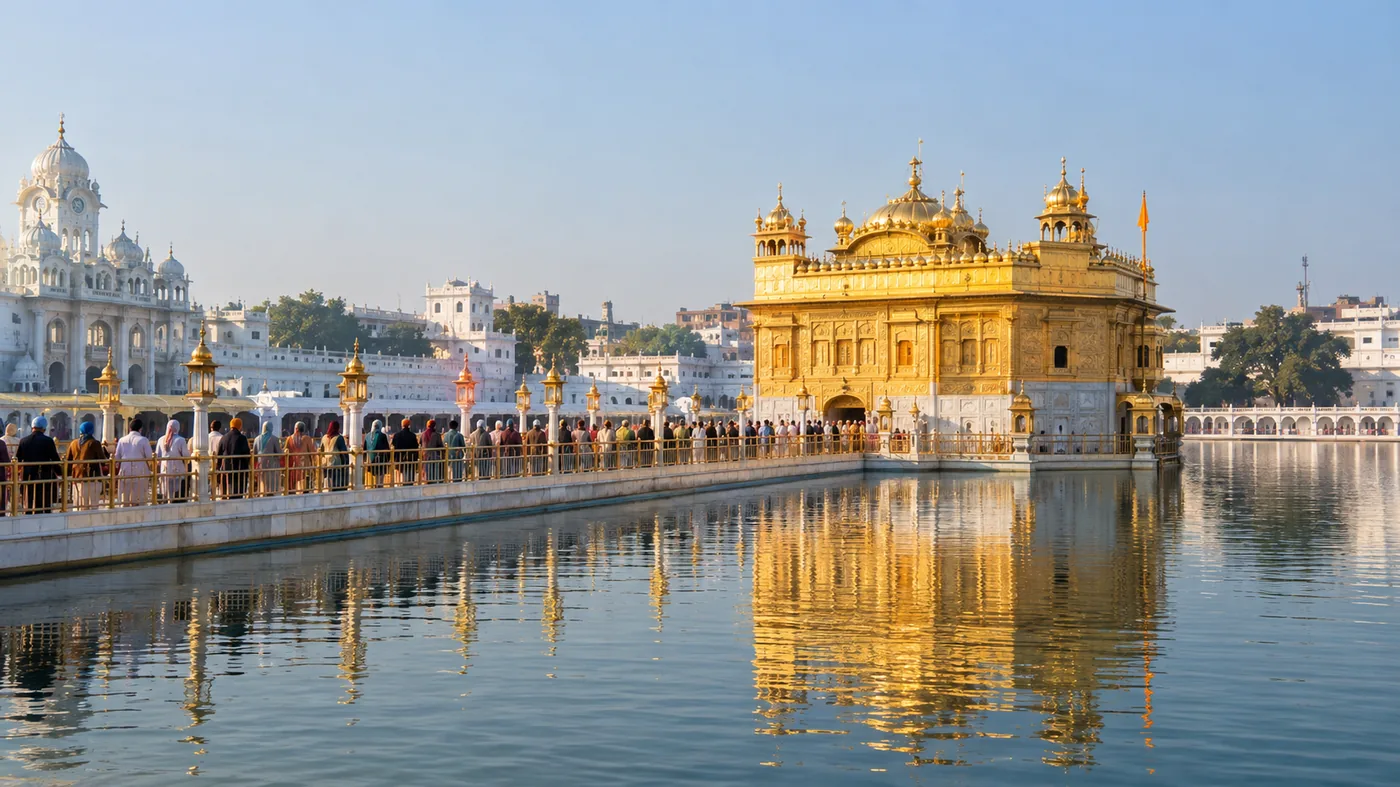
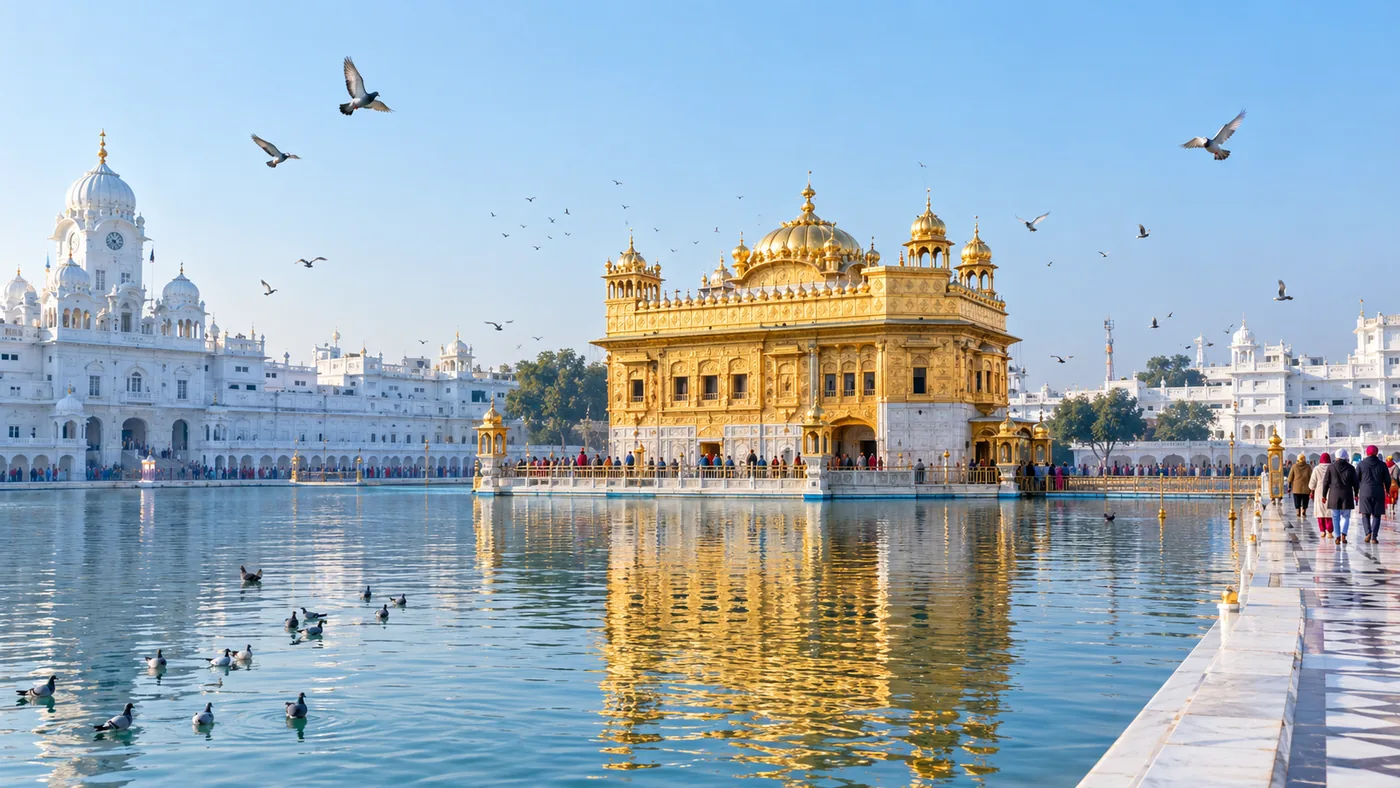
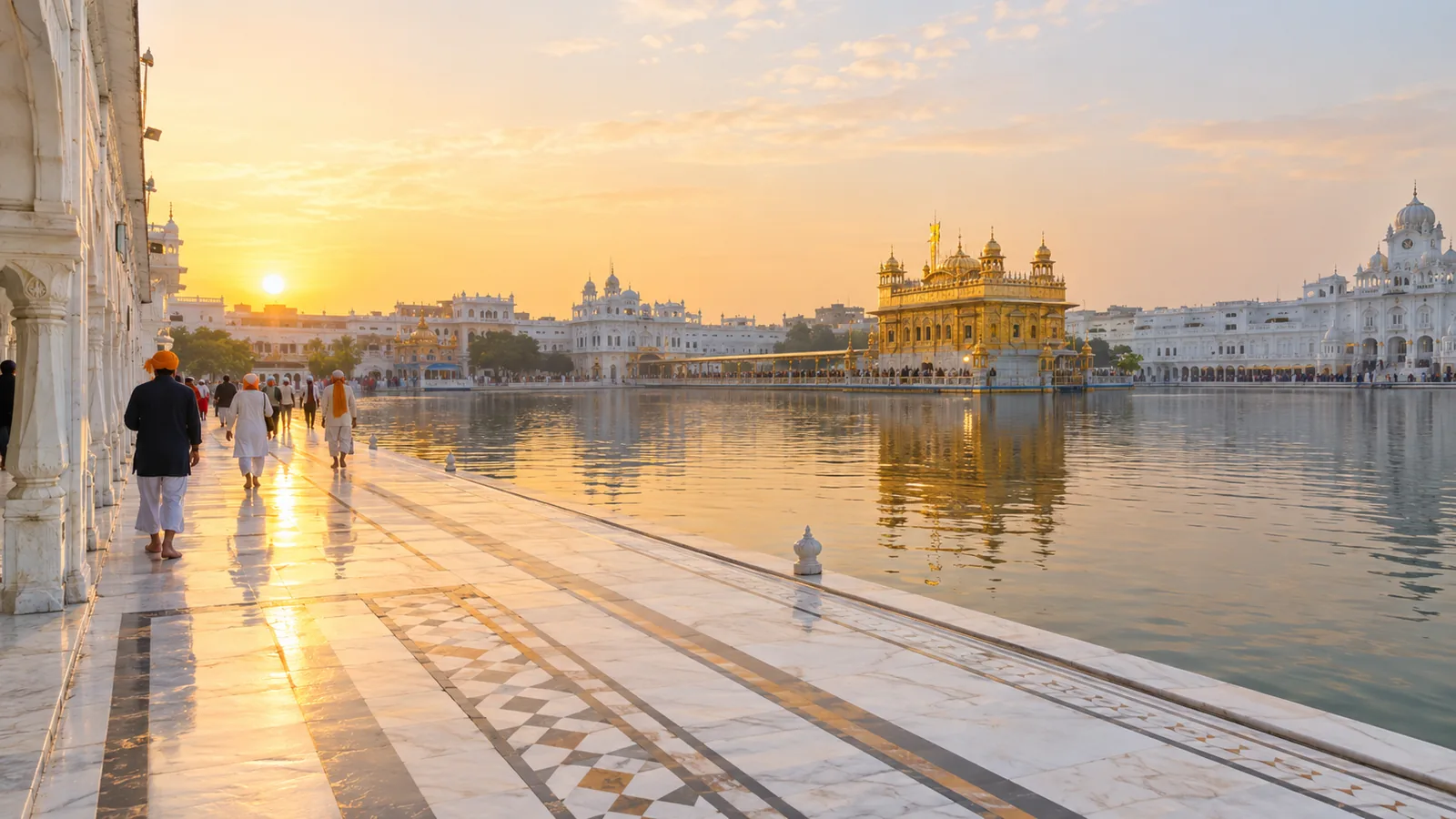
Winter is the favourite season of many visitors, and of many photographers: the air is clear once the fog lifts, the light is soft and the gold glows against a pale sky. The Palki Sahib procession, when the Guru Granth Sahib is carried to the sanctum, takes place at about 5 am in winter, an hour later than in summer, which makes a dawn visit a little easier. Times shift with the season, so check the details in the guide to the dawn and night ceremonies.
- Cold feet: you walk barefoot, without socks, as SGPC asks. At 5 am in January the marble is icy. Walk steadily, and warm up with a cup of tea in the langar.
- Warm layers: a shawl or a warm jacket over modest clothes, and a thick scarf for your head. The shawls you see on pilgrims at dawn are for a reason.
- Fog: the official district climate notes describe occasional fog in the cold season, and in December and January it often delays flights and trains, sometimes by hours. Leave a buffer day before an onward flight.
- Short days: sunset comes early, at roughly 5:30 pm in midwinter, so the temple is lit up by early evening.
How hot is the Golden Temple in summer?
Very hot. From April to June the average highs are 34 to 39 °C, days above 40 °C are common in May and June, and hot, dusty winds blow in the afternoon. The marble becomes too hot to stand on comfortably without the jute mats.
The record high in Amritsar is 47.7 °C, set in May 1978. SGPC lays layered jute mats along the walkway in summer, and in 2024 it added water-mist sprinklers, more coolers and air conditioning in the sanctum. Even so, the middle of a summer day is hard work barefoot. The heat also thins the crowd: during the May 2024 heatwave, SGPC estimated that daily visitors fell to about half the usual number, so a summer afternoon can mean a shorter queue if you can bear it.
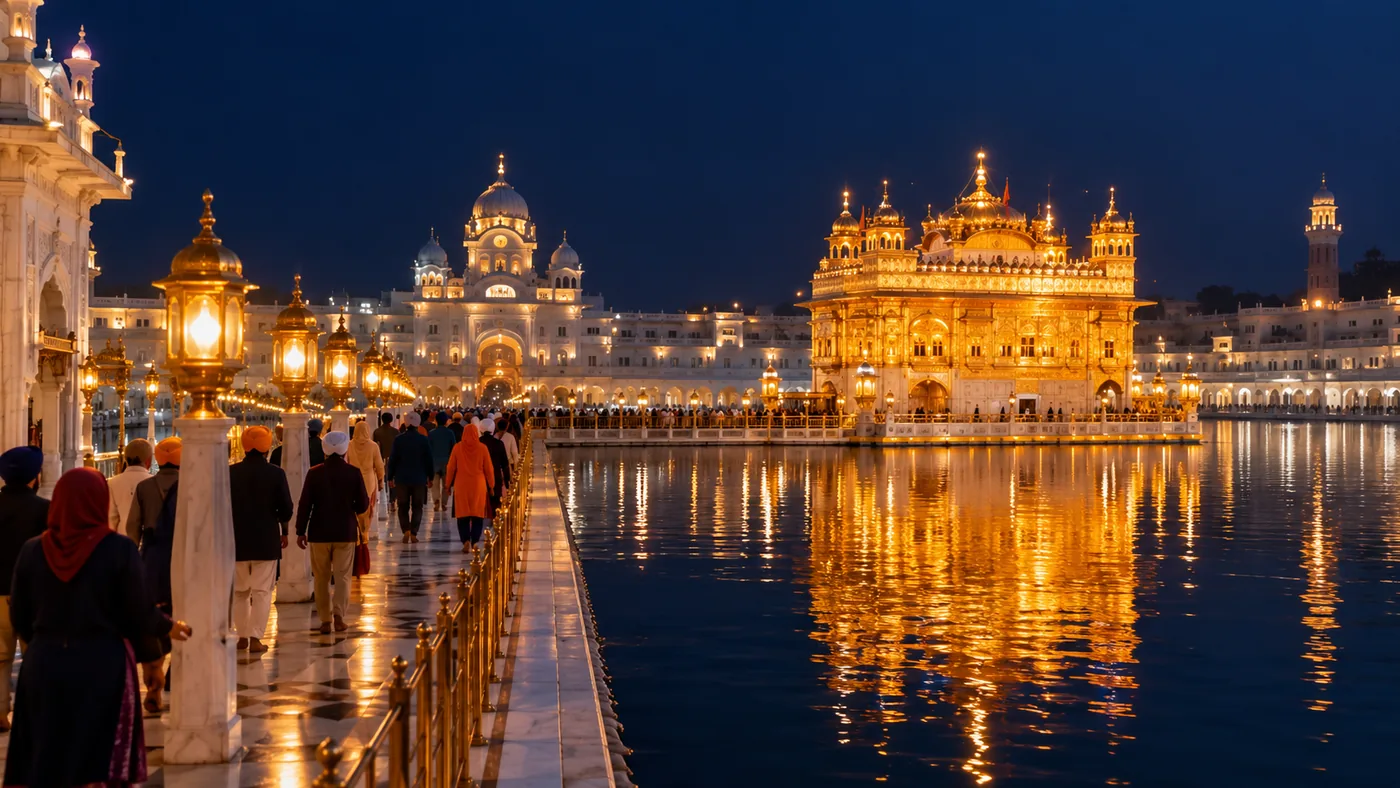
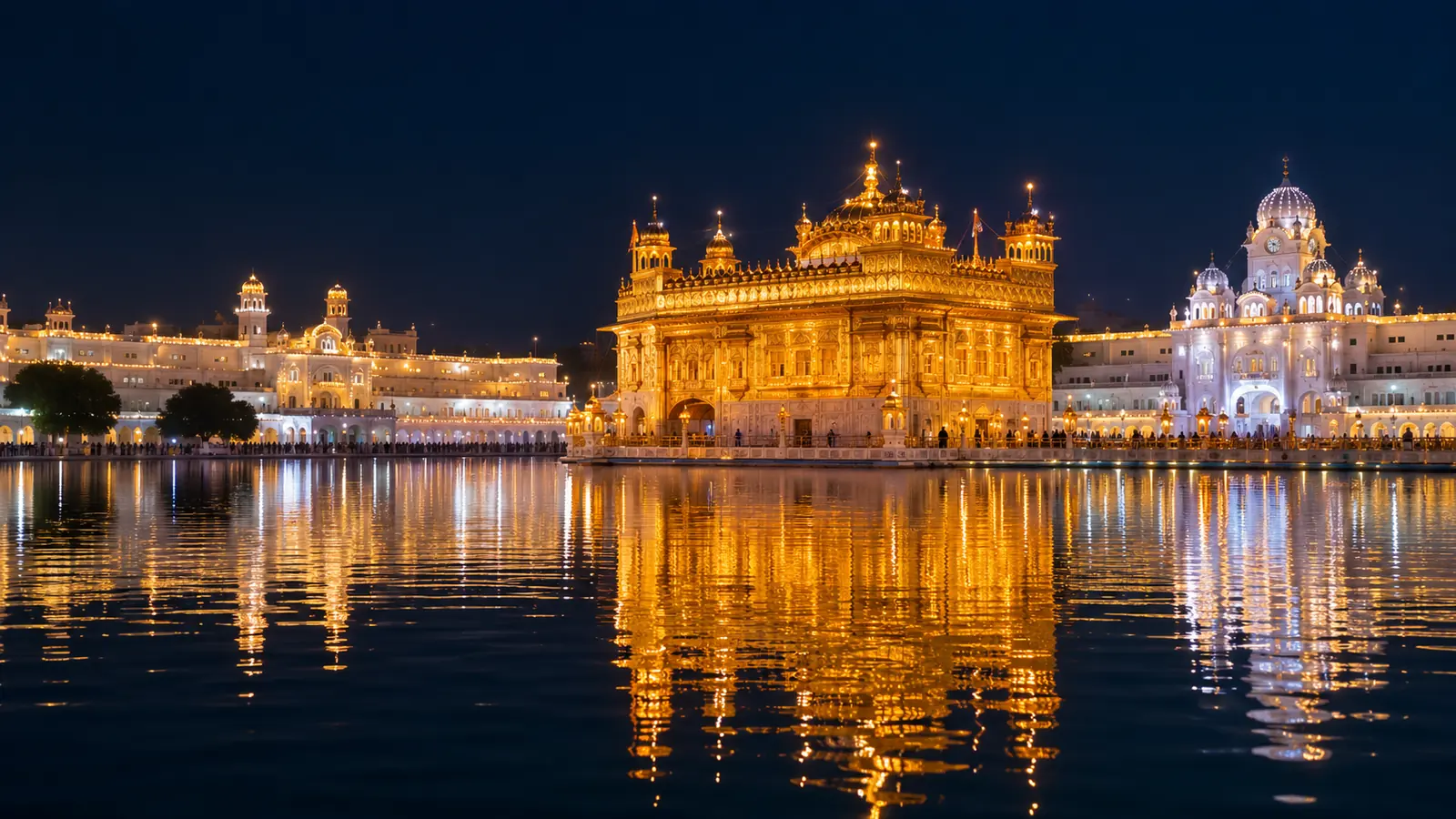
The better plan is to shift the visit to the cool hours. In summer the sanctum doors open at about 2 am and the Palki Sahib procession follows at about 4 am, so a pre-dawn visit is calm and comfortable. After dark the marble cools, the gold is lit and the hymns carry across the water. The Golden Temple night walk (4.9 from 15 reviews) is a good way to use a summer evening, and a full day tour in summer is best booked with its long, hot middle hours in mind.
The temple lit gold after dark, when the marble has cooled, with a guide who explains Sikh history and customs, then the old bazaars.
Check dates for the Golden Temple night walkIs the monsoon a good time to visit?
It is possible, but not ideal. July to September is hot and humid, with average highs of 34 to 35 °C, and July and August are the wettest months. Showers are often heavy but short, the crowds are lighter, and the wet marble near the pool becomes slippery.
About three quarters of Amritsar's yearly rain falls between June and September, most of it in July and August. A monsoon day often means a humid morning, a heavy downpour and a steamy afternoon. The complex stays open in the rain, and many pilgrims simply keep walking.
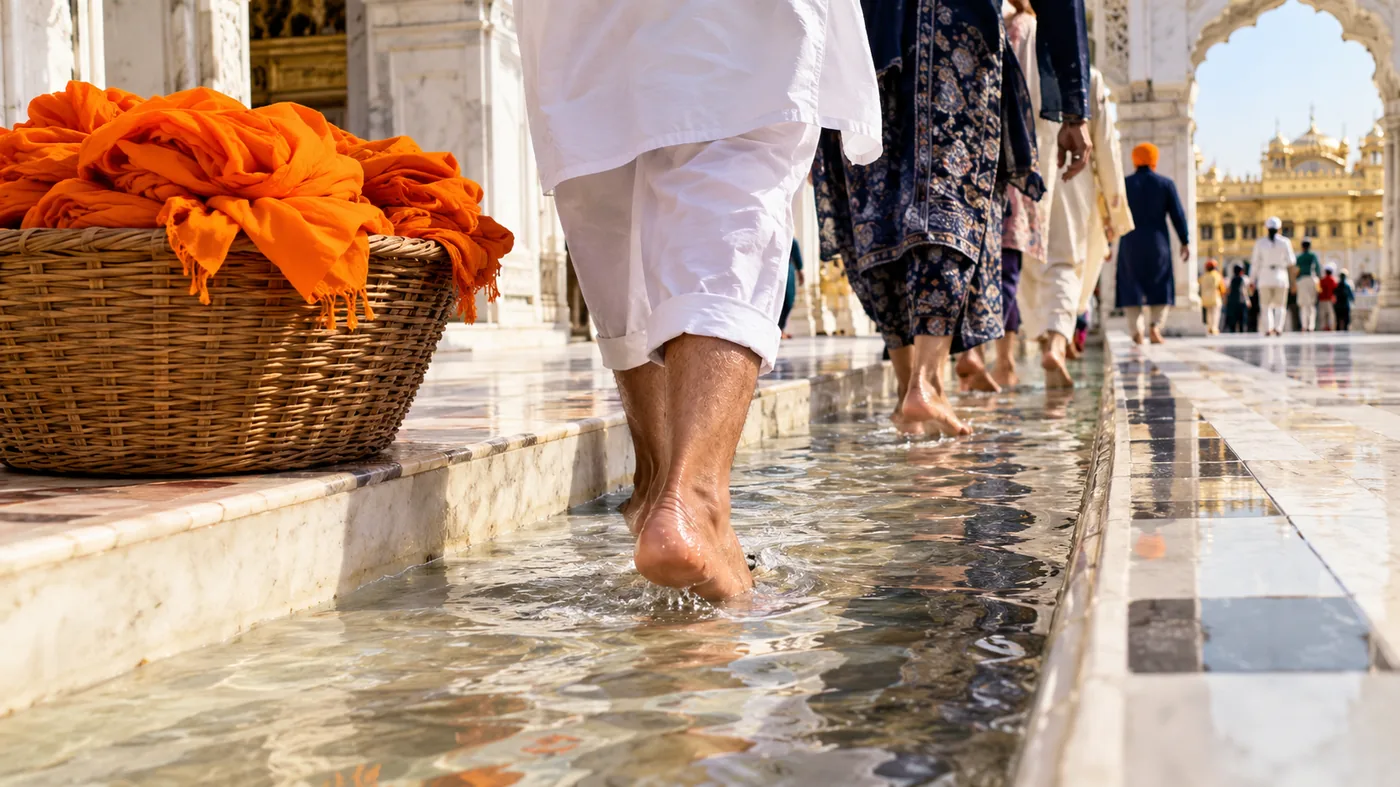
- Walk carefully: wet marble is slippery, especially on the steps down to the walkway and near the foot-wash channels at the entrances.
- Carry little: a light scarf that dries fast and a small bag you can keep dry.
- Plan the day around the rain: Jallianwala Bagh is an open garden, while the Partition Museum is indoors (closed on Mondays).
- September improves: the rains usually fade in the first half of the month, and the air starts to clear by the end.
If you want a day that also includes the border ceremony, the grandstand at Attari is outdoors, so check the forecast and read the safety guide before you book.
When are the festivals at the Golden Temple in 2026 and 2027?
The biggest are Guru Ram Das's Parkash Purab on 27 October 2026, Bandi Chhor Divas on 8 November 2026 and Guru Nanak's Parkash Purab on 24 November 2026, then the foundation day on 14 January 2027 and Vaisakhi on 14 April 2027. On these days the crowd is several times the usual size.
- 27 October 2026, Guru Ram Das Parkash Purab: the birth anniversary of the fourth Guru, who founded Amritsar. SGPC prepares extra lodging for the pilgrims who come from across Punjab and beyond.
- 8 November 2026, Bandi Chhor Divas: celebrated on the same day as Diwali. The whole complex is lit with lamps, and fireworks rise over the pool at night. It is the most beautiful night of the year at the temple, and the most crowded.
- 24 November 2026, Guru Nanak Parkash Purab: the birth anniversary of the first Guru, with processions and kirtan (hymns) through the day.
- 14 January 2027, foundation day: the SGPC calendar marks the laying of the foundation stone of Sri Harmandir Sahib.
- 14 April 2027, Vaisakhi: the harvest festival and the day the Khalsa was founded, one of the busiest days of the year.
Several of these festivals follow the lunar calendar, so their dates move each year; check the calendar on the SGPC website for later years. On festival days the sanctum queue is far longer than usual, and hotels near the temple fill early. If you want to see Bandi Chhor Divas, arrive in the afternoon, find a place on the walkway before dark and stay put. If you want a calm first visit, avoid these dates.
What time of day is best at the Golden Temple?
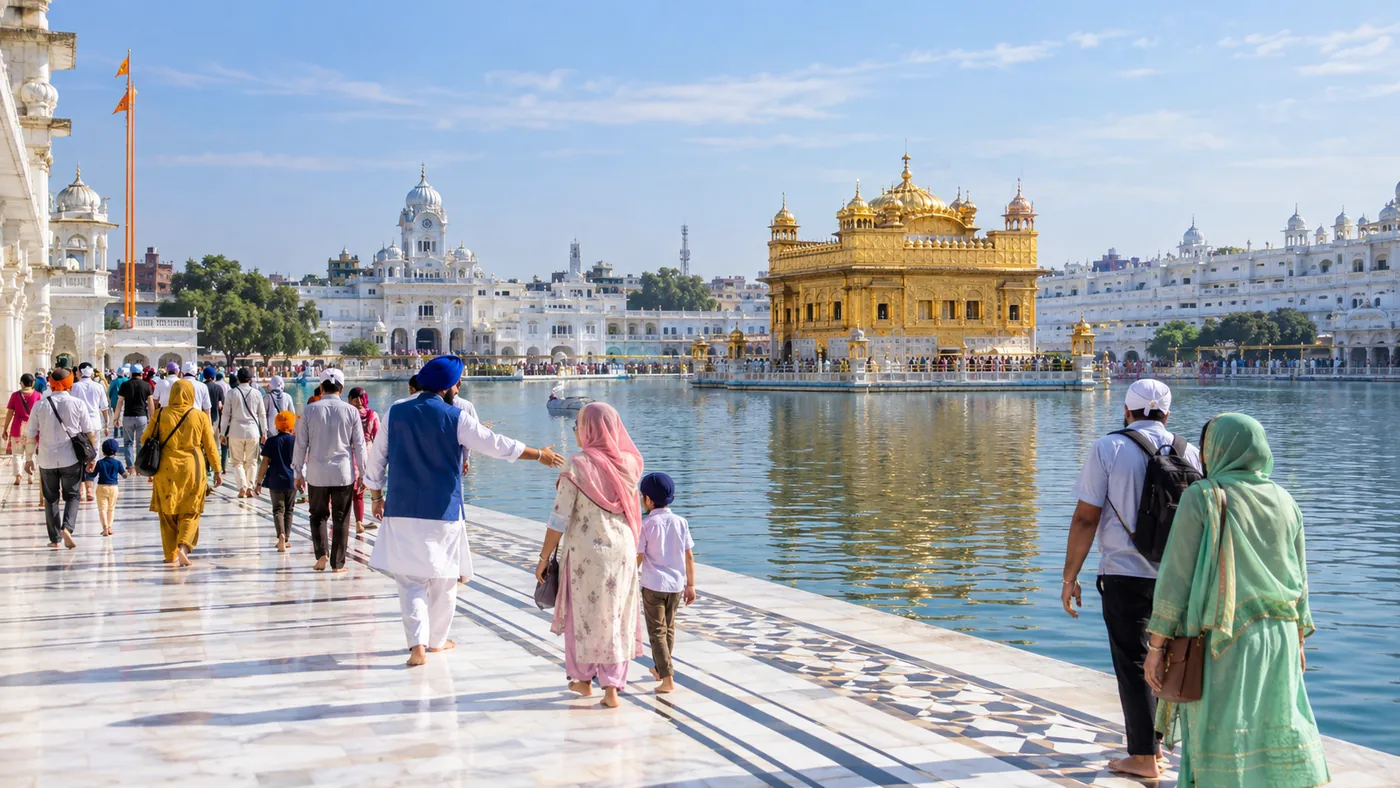
Before dawn for the calmest visit and the shortest queue, and after dark for the lit gold and cool marble. Late morning to late afternoon is the busiest part of the day, except on the hottest summer days.
- Before dawn (about 2 to 5 am): the sanctum doors open at about 2 am in summer and 3 am in winter, the early kirtan begins, and the Palki Sahib procession follows at about 4 am in summer and 5 am in winter. The walkway is calm and the queue is at its shortest.
- Sunrise and early morning: soft light on the gold, a quiet crowd, and a good time for a first walk around the pool.
- Late morning to afternoon: the busiest hours, when day tours and families arrive. The sanctum queue is often two hours or more.
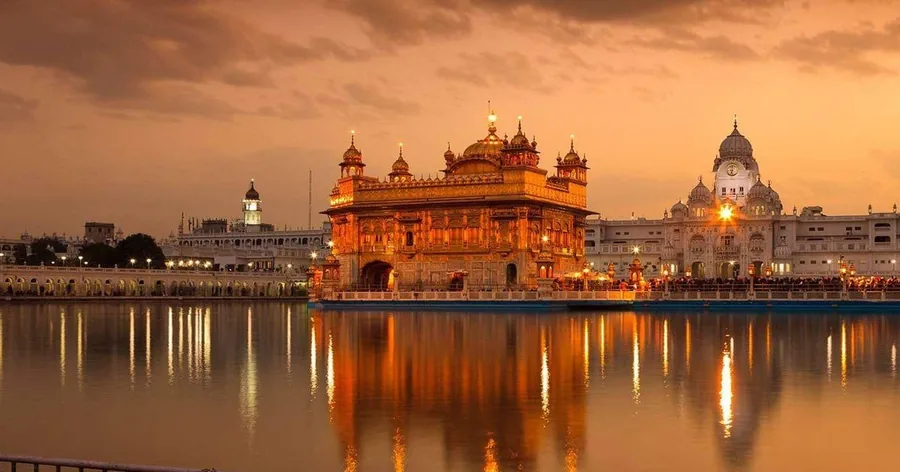
- Sunset: the evening prayer, Rehras Sahib, is sung at sunset, and the gold turns orange. Sunset comes at roughly 5:30 pm in midwinter and 7:30 pm in midsummer.
- Night: the lights come on, the marble cools, and the Sukhasan ceremony returns the Guru Granth Sahib to the Akal Takht at about 9:45 pm in winter and 10:45 pm in summer. The sanctum is then washed; the walkway around the pool stays open all night.
Times shift with the season, so treat them as a guide. Many visitors come twice, once by day and once after dark. How long each part of a visit takes is in how long to visit the Golden Temple.
Is the Golden Temple quieter on weekdays than on Sundays?
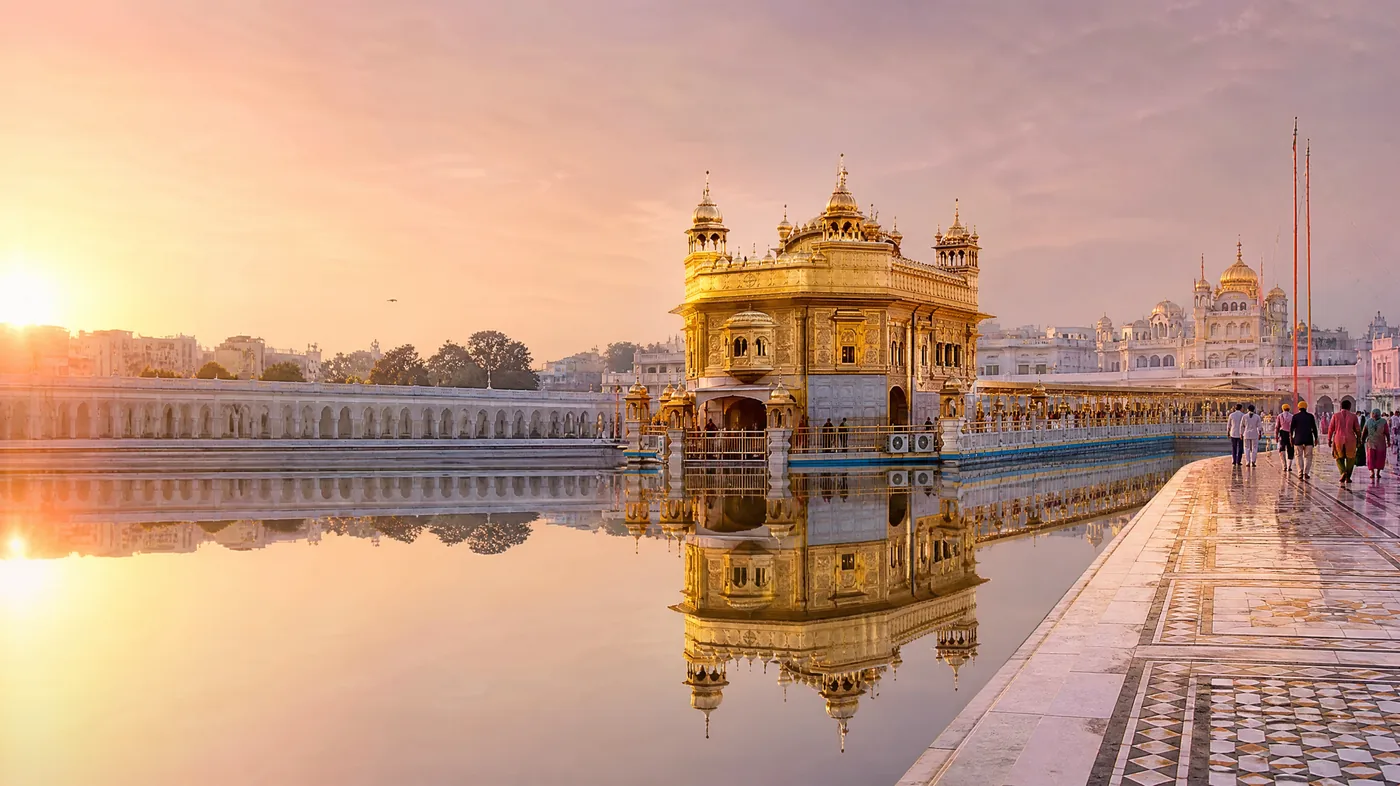
Yes. Sunday is the busiest day of the week, because local devotees from Amritsar and the villages around it come in large numbers. Monday to Friday is calmer, and weekday mornings are the calmest of all.
SGPC figures describe the pattern: Sundays are busier than other days, and public holidays and festivals are busier still. If your dates are flexible, visit the temple on a weekday and keep Sunday for something else, such as the old city or a village evening.
Plan around one more weekly closure: the Partition Museum in the Town Hall is closed on Mondays. Day tours that include it skip it that day, so a Monday is a good day for the temple and Jallianwala Bagh, and a poor day for the museum. If you want a day built around your own pace, with the temple at a quiet hour, the private Golden Temple and Amritsar day (5.0 from 17 reviews) lets you choose the order; some guests visit the temple both by day and by night.
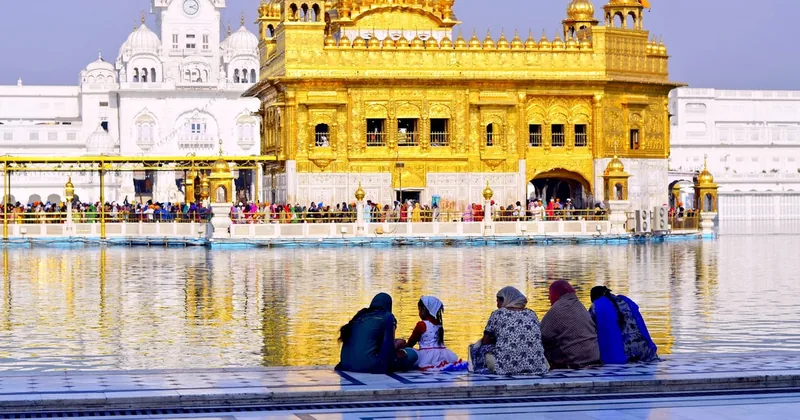
Your own guide and car for eight hours: the temple, the langar kitchen, Jallianwala Bagh and the border ceremony, in the order that suits the weather and the crowds. Rated 5.0 from 17 reviews, with a full refund if you cancel up to 24 hours ahead.
Explore the private Amritsar dayWhat time is the Wagah border ceremony in each season?
Around sunset, every day. The Border Security Force sets the time and changes it with the seasons: in 2026 it moved to 5:30 pm on 1 April and to 6 pm on 1 May. In winter it starts earlier; in autumn 2025 it began at 5 pm.
The ceremony at the Attari-Wagah border, about 28 km and 45 minutes from the temple, usually changes its timing in autumn as the days get shorter. No change for autumn 2026 had been reported at the end of September, so check the time locally or with your tour before you set off. Since April 2025 the ceremony has been held in a scaled-down form: the gates stay shut and there is no handshake. Seats are first come, first served, so arrive one to two hours early, earlier on Saturdays and holidays. Bags are not allowed, and foreign visitors should carry their passport.
The season changes the experience. In May and June you wait on an open grandstand in the late-afternoon heat; from November to February the evening turns cold quickly after sunset. The border strip is also where travel advice matters: the UK and US governments advise against travel within 10 km of the India-Pakistan border, which includes the ceremony, while the temple, about 28 km away, is outside it. Check your own government's advice and your travel insurance. The Golden Temple, Jallianwala Bagh and Wagah day (4.9 from 47 reviews) times the drive for you; if you are coming from the capital, the two days from Delhi by train includes the ceremony on the first evening.
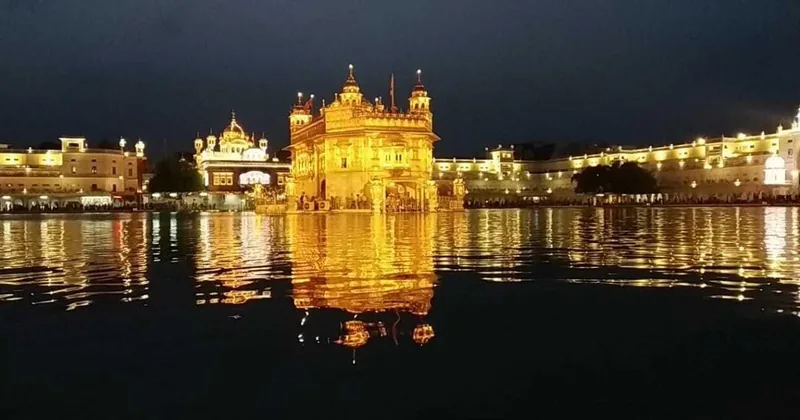
The temple and its kitchen in the morning, Jallianwala Bagh, then the border ceremony at the right time for the season, with a private car and guide from your hotel.
Check dates for the Golden Temple, Jallianwala Bagh and Wagah dayFrequently asked questions
Is October a good time to visit the Golden Temple?
Yes. October is dry and clear, with average highs of about 32 °C and lows of about 16 °C, and the end of the month is especially pleasant. Expect a very large crowd on 27 October 2026, Guru Ram Das's Parkash Purab.
Is the Golden Temple open in the rain?
Yes. The complex never closes, whatever the weather. In the monsoon, walk carefully: the wet marble near the pool and on the steps is slippery.
Is the Golden Temple open on Diwali?
Yes. Diwali falls on the same day as Bandi Chhor Divas, 8 November 2026, when the whole complex is lit with lamps and there are fireworks over the pool. It is one of the most crowded nights of the year, so arrive early.
When is the Golden Temple least crowded?
Before dawn and late at night, on a weekday, outside the festival dates. Very hot afternoons in May and June are also quieter, because the heat keeps many people away.
Ready to book
Choose your tour
Check your date and the live price on GetYourGuide; the refund terms are shown on each option.
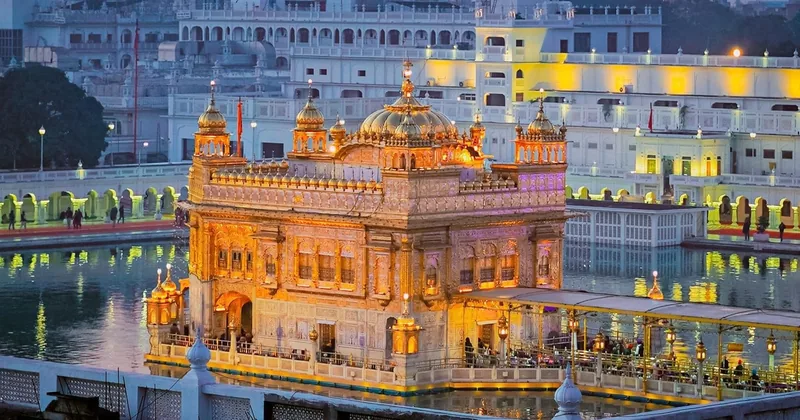
Golden Temple, Jallianwala Bagh & Wagah Day
- The Golden Temple with a guide, including the langar kitchen
- Jallianwala Bagh, a short walk from the temple
- The Beating Retreat ceremony at the Attari-Wagah border
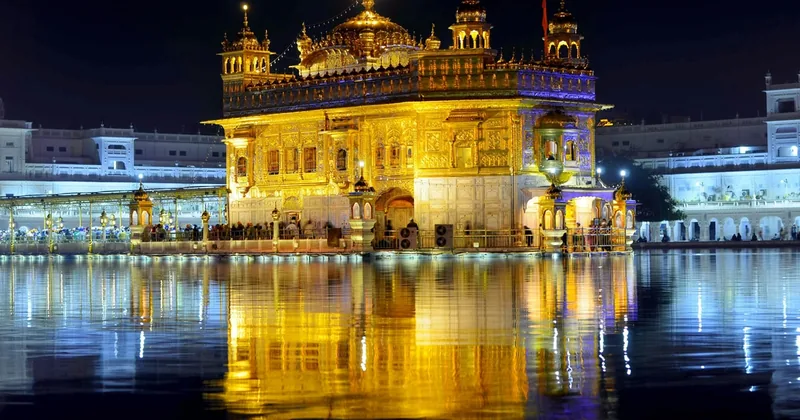
Golden Temple Night Walk
- The Golden Temple at night with a guide
- Sikh history and customs explained as you walk
- The old bazaars around the temple
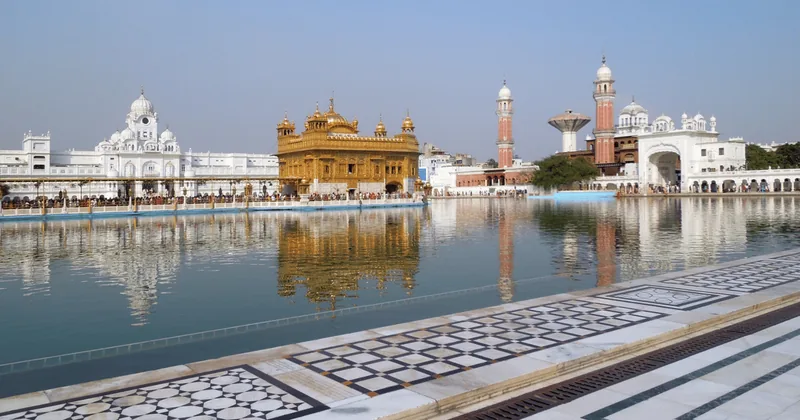
Two Days from Delhi by Train
The morning Shatabdi from Delhi, the border ceremony, a night in Amritsar and the temple with a guide